




Meet the Strategic Advisor
In a world where content gets cheaper by the minute, Doug is a deep systems practitioner and experienced operator.
Doug works through a transformational consulting model where results are driven by internal changes and customized systems. .
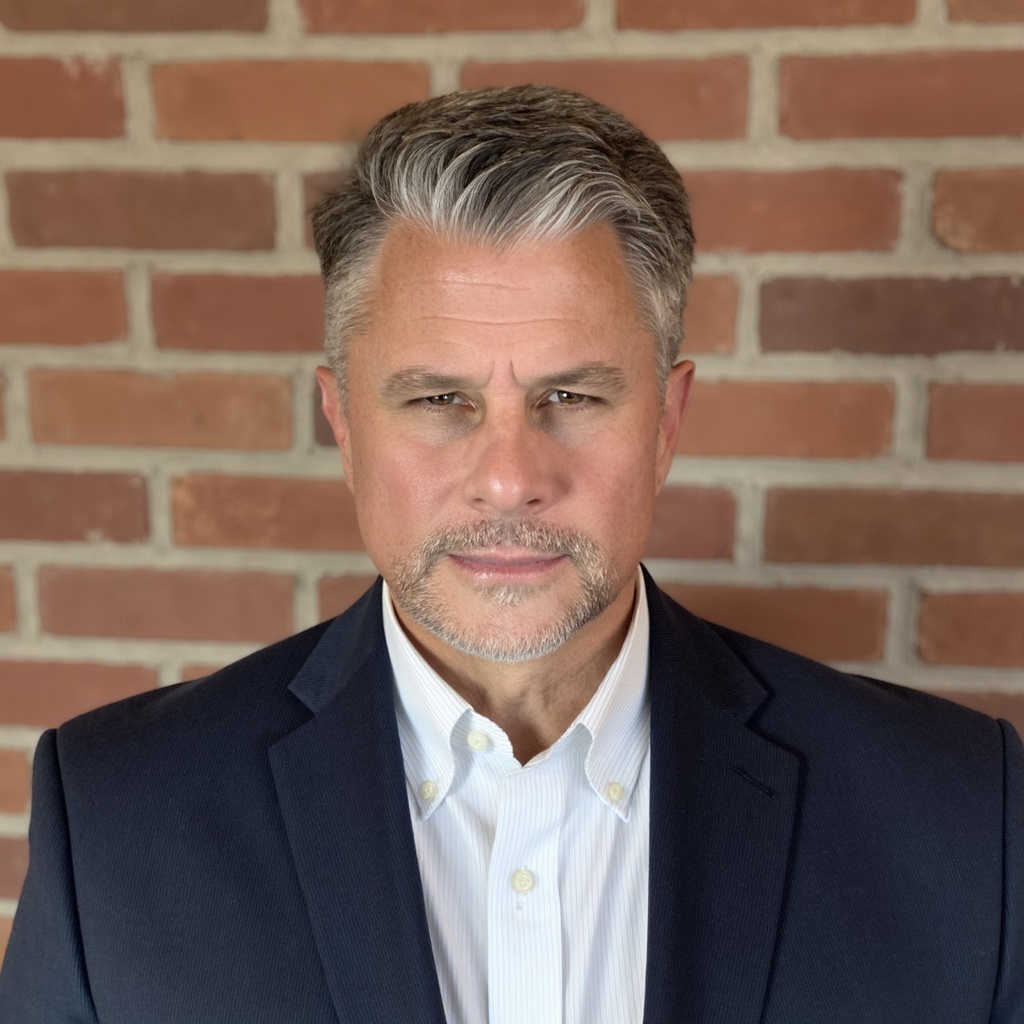
Doug Griffin
Founder / Strategic Advisor
What’s The Difference
Most advisors can help in one lane with experience in operations but miss the psychology required to build trust across an organization.
Some understand performance but lack the understanding and empathy needed to deliver founder wisdom.
Some understand mindset but cannot drive enterprise results.
My work sits at the intersection of all three,
where real founder transformation happens.
Trust
Deep Human Development
Before business advisory, I spent 10-years in high-trust personal development work, accumulating more than 10,000 hours of coaching and transformational leadership experience.
That work sharpened my ability to recognize hidden fear patterns, relational breakdowns, identity friction, and the emotional dynamics that quietly shape leadership decisions.
Founders often do not need more tactics first. They need deeper alignment.
Flow
Founder Capacity and Performance
I am certified in PNCC Flow Coaching, with specialized training in sustainable high performance, attention management, and challenge-skill alignment.
I help founders reclaim underleveraged mental energy, restore decision clarity, and operate from a stronger internal state rather than chronic pressure.
I also build customized founder tools, including tailored Flow planning systems for devices like ReMarkable, helping leaders convert insight into daily execution.
Leverage
Business Performance and Operating Execution
I hold an MBA from Purdue University’s Krannert School of Management and have served as a Fractional COO / Integrator, helping businesses improve leadership structure, accountability, growth execution, financial performance, and operational scale.
I bring practical business judgment, not theory.
This work lives where strategy meets execution.
FAQ
Here are some answers to Frequently Asked Questions.
WHAT IS THE FOUNDER EVOLUTION FRAMEWORK?
The Founder Evolution Framework is the process a founder goes through when the business outgrows the way they naturally lead.
In the early stages, your involvement drives everything. As the company grows, that same involvement starts to create pressure across the team, the structure, and often the family.
This framework helps you evolve from being the center of execution to the architect of the system, without losing your influence or your place in the business.
WHY DO FOUNDERS GET STUCK AT THIS STAGE?
Getting stuck isn’t the founder’s fault, but it is their problem. No founder starts their company with this transition in mind, otherwise this problem wouldn’t be so pervasive.
You’ve probably never heard a founder say, “In year 12, when I hit 10m in gross revenue – I’ll hire an executive advisor to ensure my identity evolves”.
The confirms that the root issue has nothing to do with effort or capability. It’s that the business was built around you, and it hasn’t been restructured to operate beyond you.
That’s where founders get trapped. More founder effort at 3m makes it better. More founder effort at $10 makes things worse.
WHAT'S THE DIFFERENCE BETWEEN CHANGE MANAGEMENT AND CHANGE DEVELOPMENT?
Change management is how a business implements new processes, systems, or structures. It focuses on execution, communication, and compliance as a way to help increase the probability of a successful implementation.
Change development is how the leader evolves so those changes actually hold. It focuses on identity, trust, flow, and leverage.
Most companies invest heavily in change management. Very few invest in developing the person responsible for leading it.
WHERE DOES THE GREENLIGHT CONSILIENCE MODEL FIT?
The consilience concept is simply how we identify what actually needs to change in the business.
Most founders experience pressure in multiple areas at once. Team issues, family tension, health concerns, inconsistent performance, unclear leadership. They look separate, but they’re usually connected.
The Consilience Model maps those signals back to a single source. That diagnosis guides the evolution of the operational structure once the owner starts to evolve.
Instead of guessing what to fix, we diagnose where the structure has broken down because of the unevolved control-based identity. There are common issues, like revenue concentration around the owner, for example, that need attention.
DO I NEED TO BE READY TO STEP BACK?
No. You need to be willing to change how you lead.
This framework is designed for founders who want to stay involved, not disappear.
The goal is not to remove you from the business. It’s to build a structure that allows you to lead it at a higher level.
WHAT DOES “EVOLUTION” ACTUALLY MEAN FOR THE FOUNDER?
It means your mindset upgrades in three critical areas:
- Trust – there are valid reasons why it’s difficult to trust, but that doesn’t mean their good for the business.
- Flow – your business is a direct reflection of you. If your operating rhythms are dysfunction – well…
- Leverage – you’ll find a new sense of power and authority once you upgrade your internal operating system.
You gain more clarity, more leverage, and more control over outcomes, just without the constant involvement.
WILL I HAVE TO GIVE UP CONTROL?
You’ll give up the kind of control that’s slowing the business down.
Micro-control creates dependency. It forces decisions back to you and limits how far the company can scale.
What replaces it is structured influence. Clear authority, defined roles, and systems that carry your intent without requiring your presence.
You’re not losing control. You’re upgrading how it works.
WHAT DOES THE PROCESS LOOK LIKE?
There are six stages, including the diagnostic to ensure you are a good fit.
The process has been designed to work while you work, meaning that you’ll have to devote time to it, but you won’t have to leave your company for weeks at a time.
It’s a challenging process that requires real commitment at every level. Any change of this kind is worth the investment.
WHAT IF MY FAMILY IS PART OF THE BUSINESS?
Then this work becomes even more important.
Family businesses carry overlapping roles. Ownership, leadership, and relationships often sit inside the same people. When those aren’t clearly structured, tension builds fast.
We separate those systems so decisions stop becoming personal and the business can operate with clarity.
This protects both the company and the family behind it.
WHAT KIND OF COMPANIES IS THIS FOR?
Privately held, founder-led businesses typically between $10M and $75M in revenue.
At that stage, the business has momentum, but the structure still reflects how it was built, not what it needs to become.
That gap is where founders feel the most pressure, and where evolution becomes necessary.